

Nanjing Confucius Temple, located on Gongyuan Street on the north bank of the Qinhuai River in Qinhuai District, Nanjing, Jiangsu Province of China, west of the Jiangnan Imperial Examination Hall, lies in the heart of the city's renowned Nanjing Confucius Temple–Qinhuai River Scenic Belt. Also known as Nanjing Kong Miao, Nanjing Wen Miao, or Temple of Lord Wenxuan, it was built to worship and offer sacrifices to Confucius. It was China’s first state-sponsored highest institution of learning, one of the country’s four great Confucian temples, a hub of ancient Chinese culture, and a gathering place for Jinling’s historical and humanistic heritage. During the Ming and Qing dynasties it served as Nanjing’s educational center and ranked as the largest educational architectural complex in southeastern China.
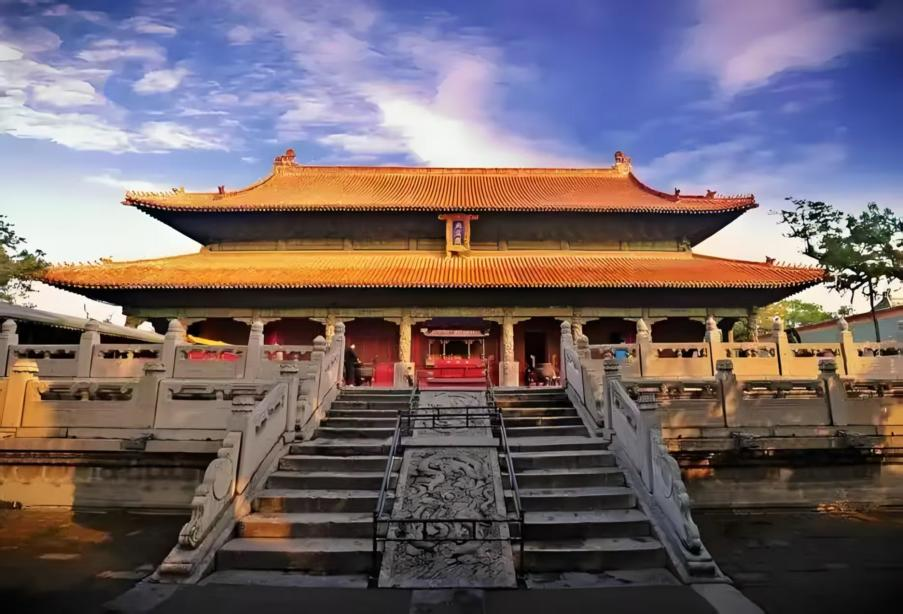
The temple’s origins trace back to the 3rd year of Xian Kang era in the Eastern Jin Dynasty, 337 AD, when Prime Minister Wang Dao proposed that “governing the state must give top priority to cultivating talent” and an Imperial Academy on the south bank of the Qinhuai River was established. In the 1st year of Jing You in the Northern Song Dynasty, 1034 AD, the Eastern-Jin academy was moved to the north bank and a temple dedicated to Confucius was erected in front of it. Destroyed by fire during the Jian Yan period of the Southern Song, it was rebuilt in the 9th year of Shao Xing, 1139AD, as the Jiankang Prefectural School. Under the Yuan dynasty it became the Jiqing Lu School; in the early Ming it was first the National Academy, then converted into the Yingtian Prefectural School. In the early Qing Dynasty, the prefectural school was changed into the county school of Shangyuan and Jiangning. Burned again during the Xian Feng reign, it was reconstructed in the 8th year of Tong Zhi, 1869 AD. Architecturally the complex follows the Ming-Qing imperial code, modeled on Beijing’s Forbidden City: a central axis, nine successive courtyards, timber-and-stone hybrid structure, yellow glazed tiles and red walls, highlighted by dragon-pattern stone carvings and painted dougong brackets, combining sacrificial function with Confucian cultural symbolism.
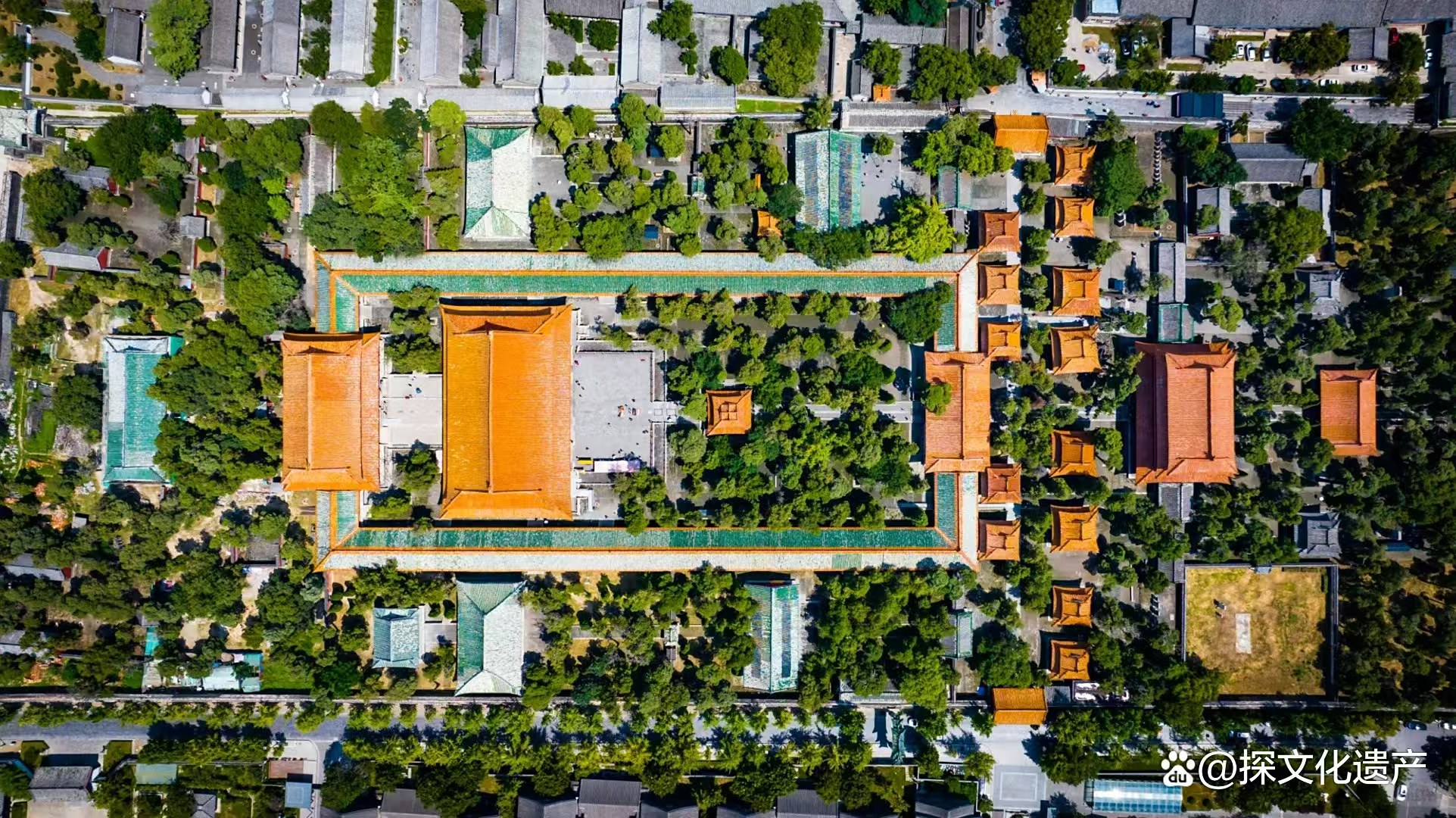
The Confucius Temple is an immense ancient architectural ensemble consisting chiefly of three complexes: the Temple of Confucius, the Academy, and the Imperial Examination Hall. Among its structures are the Screen Wall, the Pan Pool, memorial arches, the Juxing Pavilion, the Kuixing Pavilion, the Lingxing Gate, the Dacheng Hall, the Mingde Hall, and the Zunjing Pavilion. Celebrated as “the scenic jewel of the Qinhuai River,” it has become a signature landscape of the ancient capital. From the Six Dynasties through the Ming and Qing Dynasties, noble falimies clustered nearby, giving rise to the saying “the gilded splendor of the Six Dynasties.” Today it is China’s largest traditional ancient street, ranking with Shanghai’s City-God Temple, Suzhou’s Xuanmiao Temple, and Beijing’s Tianqiao as one of the nation’s four great bustling bazaars. It is a famous open, national AAAAA-level scenic area and an international tourist destination.
First Review by Zhan Xia
Second Review by Zhang Jian
Final Approval by Su Xiaoping
