

On the afternoon of November 21, an academic seminar titled “Optimal Control Technology for Power Converters Based on Machine Learning” was held by the School of Electrical and Information Engineering in the conference room on the second floor of Teaching Building 1, CIT. The event was conducted in a hybrid online and offline format and was hosted by Associate Dean of the School Professor Liang Chunhui, with the participation of Dean Sun Hongbin, faculty representatives, and graduate students specializing in hydropower.
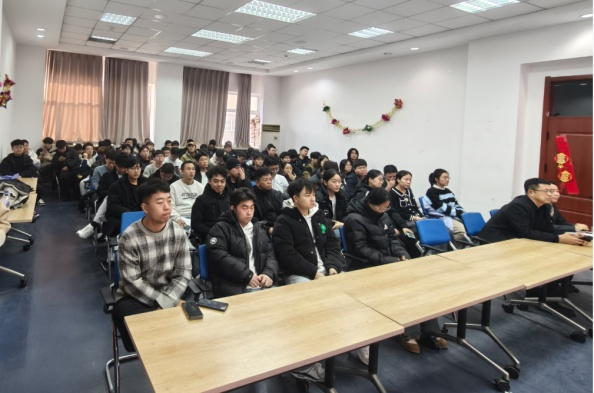
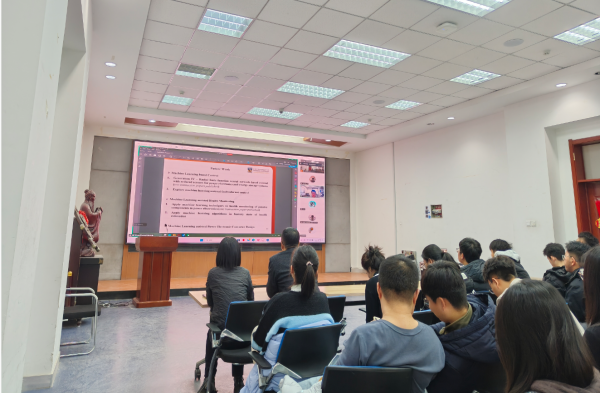
The lecture featured Professor Zhang Xinan from the School of Engineering of the University of Western Australia (UWA) as the keynote speaker. Professor Zhang, a doctoral supervisor of UWA, has over 15 years of expertise in power electronics, electric drive technology, and smart grids. He has led government and industry projects totaling 20 million Australian dollars, published more than 140 papers in top-tier journals (Q1), and has been listed in the Elsevier Global Top 2% Scientists ranking from 2019 to 2024. He also serves as an editorial board member for several prestigious international journals, including IEEE Transactions on Power Electronics and IET Energy Conversion.
During the lecture, Professor Zhang began by analyzing the limitations of traditional control methods for power converters and then focused on the application of machine learning (ML) techniques. He explained that compared with traditional model-based control, ML techniques are less sensitive to model uncertainties, and capable of delivering optimal solutions in scenarios with unpredictable parameters; meanwhile, they also enable stable closed-loop control with high bandwidth and low computational cost, meeting the real-time response requirements of industrial applications.
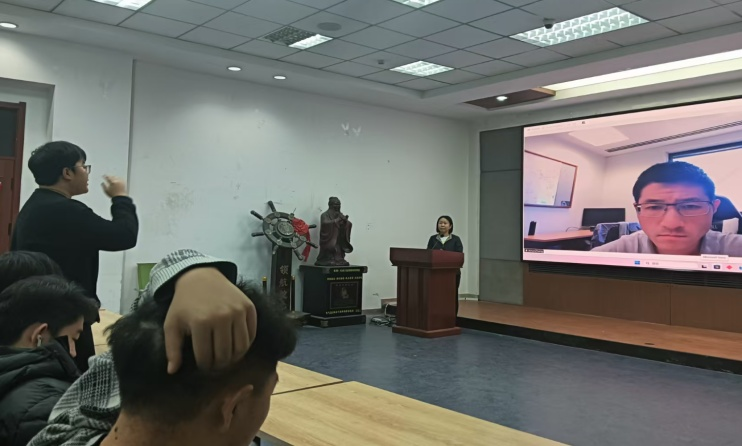
In the interactive session, Professor Zhang engaged in in-depth discussions with faculty and students on topics such as machine learning algorithms, optimal control technologies for converters in new power systems, and the practical implementation of related technologies. He also provided guidance on academic paper writing based on his experience in publishing in top-tier journals, clarifying key points for crafting high-quality papers.
This lecture broadened the students’ horizons regarding cutting-edge academic research. It not only served as a bridge for international academic exchange between faculty and students but also provided strong guidance and practical assistance for the school’s scientific research and talent cultivation efforts, injecting new momentum into the future development of the discipline.
First Review by Zhan Xia
Second Review by Zhang Jian
Final Review by Wang Rouhua
